Wednesday, May 16, 2012

From A to B without Going Broke

Road Trip 035 
In the house we were staying at in Arizona, in the section of the main room that one would probably call the office, sat a novelty I hadn't seen in some time. It looked a bit like a ball with a world map glued to it, perched on a metal stand. It felt familiar, but the prospect of putting it to use without employing a keyboard or mouse seemed foreign to me. I inspected it for a while until I figured out which country was ours, and from that point I could see clearly where we stood, and where we were headed. So it was with this device that my lady and I planned our way from the place we were then to the place we are now.
 
It had been taking me longer that had I expected to stop feeling guilty about leaving behind a good job and a furnished home to go fulfill some carpe diem vision for my life. Granted, I was thoroughly enjoying myself, but something still weighed heavy on me. Upon consideration, I decided that the problem was the same as it had always been; I simply had too much stuff. Too many things were cluttering up my compact little life. Trying to take my world with me everywhere I went just wasn't working. 
 
Thus, once again, I sorted through my bags, boxes, and bins, setting aside those items which I was willing to part with. These things were then stacked into the back closet where they would wait for my eventual return. What remained was one guitar, a short stack of books, a single duffel of clothes and shoes, a bin of my favorite cooking utensils, and a small selection of fresh, canned, and frozen foods—the bare minimum of what we would need to take five days driving from Phoenix, AZ to spend a month in Yaak, Montana.
 
Sedona, AZ: Our first day of being truly homeless was spent just north of Phoenix in this particularly beautiful part of Arizona. The plan was simple, at least on paper: travel with our belongings in the bed of the truck and covered by a tarp, stop to spend the night at a camp site, move all of our belongings into the cab of the truck, then string the tarp over the truck bed and BAM! a free tent to sleep in. Finished off with a thick piece of foam at a few layers of blankets, it was everything we needed. 

Razr 969Razr 968


Our dinner for the night was equally frugal. After the gas, food and lodging are your major expenses on a road trip, and camping mitigated both of these. The site itself was $16, and the wood for a cooking fire was another $7. This brings me to my first bit of advice: if you don’t already own a set of cast-iron pans, then for the love of God stop reading this and go buy some. Not only are they great in the home kitchen, maintaining even heat and transferring easily from stove to oven, but they remain in good condition even when used outdoors over an open fire. We used our largest to make a cabbage tomato stew. Sure, I’ve prepared fancier dishes, but after a long day of hiking in the sun it was quite relaxing to sit outside as the evening cooled and enjoy a nice warm home-cooked meal together.
 
The Grand Canyon: Day two began with hot coffee made on a small Coleman camping stove. We broke down our camp and packed up the truck, then headed toward the big hole in the ground that locals call simply “The Canyon”, as if there are no others. Honestly, I didn’t expect to be as impressed as I was. Even standing there in front of it, it seemed as if we were staring at a picture.
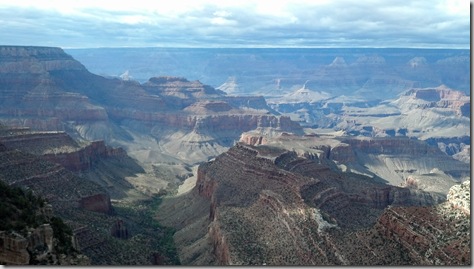
Road Trip 088 
The Grand Canyon has plenty of camping, and we were there early enough in the season that finding a space without a reservation was no trouble at all. After spending so much time out and about, however, we decided that our dinner for the evening should be a simple classic: grilled cheese and tomato soup. It’s an easy thing to fix while camping, since canned tomato soup concentrate takes up little space and cheese keeps well even in a modest soft-sided cooler like ours. We’d picked up some firewood from the local store earlier in the day and noticed they had PBR for $0.79 a bottle, so that became our libation for the evening. 
 
The one hitch was that we hadn’t exactly brought a plethora of cheese options to choose from, just a half-used chunk of parmesan and some string cheese that we’d grabbed for hiking snacks, but we weren’t going to let that stop us. I think we both expected it to be mediocre at best, but instead we discovered how wonderfully string cheese works in a toasted sandwich. With each bite strands of melted cheese drew a line from our hands to our  lips like some kind of over-the-top pizza commercial. The great thing about living on such a tight budget is that even the simplest of pleasures become intensified.
 
Lake Powell, AZ: Obviously, dinner and coffee aren’t the only two meals in a day, and we weren’t about to fork over our limited funds to pay for lunches as we traveled. Instead, we’d brought along several fillets of halibut that we had pilfered from the freezer of the house in Phoenix. Each night we’d poach one, and the next day we’d turn it into fish salad sandwiches.
 
What I’m about to tell you next may shock and offend, but we didn’t bring things like mayonnaise, mustard, or relish with us to make fish salad. We didn’t have any, and we certainly weren’t going to buy any. So, being the resourceful couple that we are, we got some for free… from gas station condiment bars. Mayonnaise and mustard are the easiest to come by, but relish is pretty common too. I was most surprised, however, to find packets of chopped onion and even lemon juice from the coffee/tea station. 
 
Armed with these packets, a loaf of bread, and a bag of poached fish, we stopped for lunch at Lake Powell on our way from The Grand Canyon to Bryce Canyon. We had one beer left, which we shared while enjoying our sandwiches and relaxing by the water. I later did the math and figured that the whole lunch for both of us cost exactly $1.29. Take that, dollar menus!
 
We made it to our campsite late that night, and spent the next morning exploring the strange rock formations of Bryce Canyon before continuing on our journey.

Jackson Hole, WY: After all the camping and driving and fish sandwiches, we decided it was time for an easy evening. It came up sort of by chance, but we just happened to be driving through this cute little town in the early evening and both concluded that we were done traveling for the day, so we found the cheapest motel we could get and decided it was time for someone else to fix us dinner. 
 
Not wanting to spend to much money, but still wanting to relax and enjoy ourselves, we found a proper restaurant to have some cocktails and share an appetizer. The Silver Dollar Bar and Grill took good care of us, and after soaking up some local food and atmosphere we promptly hit the Wendy’s drive thru down the road to quell our dinnertime hunger. It didn’t matter that our motel room was what some might call “dinky” or “dumpy” or “dilapidated” or some other adjective beginning with “d”, and it didn’t matter that dinner came from a bag, it was just nice to sit and watch TV from the comfort of a warm bed for the night.
 
Razr 1017Billings, MT: For our last night on the road my lady wanted to stop and see some of her old friends in Billings. I happily agreed, since we were far North enough that there was no interest in camping overnight out in the cold, and the day had been long enough that I didn’t want to set up the “tent”. I wasn’t really sure what to expect, so I was notably surprised when the place we pulled up to turned out to be a llama farm. 
 
They took us in for the night, fed us, introduced us to their children and pets, and showed us around their farm. I’d never stood so close to a llama before, and I found there appearance to be quite endearing. Watching them move could make anyone feel lighthearted—something between hopping and prancing. It was an interesting life to get to peer through the window at, but honestly after all that time being on the road it just felt good to be in the company of another couple for the evening.
 
We left early the next morning, before anyone else was awake, and began the final leg of our journey from point A to point B.

Friday, May 4, 2012

Coming Up Daisies

My lady and I recently returned from a short trip south of the border, where we spent the week in Puerto Penasco, Sonora. As luck would have it, the American spring breaks had all ended the week prior, and the Mexican spring break had finished up literally the day before we got there. We only saw two other families in our hotel the entire time, and most of the cantinas and tiendas were equally empty. Needless to say the bartenders and shopkeepers were very happy to see us. We would walk down the street and be hollered at and waved down with menus. Boat crews would offer us great deals on fishing charters or sunset cruises. We were popular with the locals, is what I'm trying to say. But we knew better. We hadn't come there to spend money; we were on a budget. 

We specifically picked a hotel with a full kitchen, just to avoid restaurant and bar markups (which, admittedly, were much lower there than here in the states). We walked right past them all and made a bee line for the fish market. Here we were equally popular, as everyone we passed claimed to have the best camarones or the freshest pescado. We picked up some of both (shrimp and fish) as well as some scallops from a vendor who, while he spoke perfect English, I tried my best to practice my Spanish on. These were to be our meals for the week. 

The next day that fish became our lunch: ceviche
 of flounder, margaritas made with fresh citrus, corn tortillas straight from the tortilleria, and a view of the water. The ceviche was good, and the tortillas were great, but the Margaritas were perfect. It's funny how a Margarita made from scratch at home can be both better and cheaper than it's restaurant-purchased counterpart.

The Margarita


I think its fair to say that we are all familiar with the Margarita. At the very least, most people have imbibed a neon colored tequila drink at some shoddy Mexican restaurant once in their lives. Its history, however, is much more interesting than the drink most people get served. It's hardly traditional to the Mexican culture. In fact, if it weren't for American prohibition, this drink would never have come to be. 

In the late 1800s a cocktail came into vogue known as the Daisy. It was a simple variation on the sour: alcohol, sugar, lemon juice, and orange liqueur. A couple of decades later, after the passing of the 18th amendment, Mexico became the popular place for an American to (legally) get a drink. Wealthy Americans would commonly travel to Mexican resorts to relax and wet their whistle, doing their best to order cocktails they were familiar with at these Mexican restaurants and bars. A little after repeal journalists and other travelers started talking about the "Tequila Daisy" they'd been tippling south of the border. Imagine, if you will, an American customer trying to explain to a Mexican bartender how to make a drink like the Daisy. Of course they'd be starting with tequila, and limes were much more common than lemons in Mexico. (In fact, in Mexico there is no word for lemon, they are simply referred to as a yellow lime, or limon amarillo.) Hmmm... tequila, sugar, lime, orange liqueur... Sounds familiar, right? The icing on the cake: you'll never guess the Spanish translation for "Daisy". That's right, Margarita.

This is the basic recipe I usually start all my Margaritas with. The nice thing about it is that you can use these ratios to make a pitcher for a crowd, or just a few for you and someone special, and it can be easily adjusted to suit individual tastes. I usually try to use only lime juice, but I've made margaritas with various combinations of lemon, lime, even grapefruit with good results. Sometimes I'll include an orange in my citrus juice and omit the orange liqueur entirely for a drink that's fresher and less cloying. (This can be especially handy if you're traveling and don't want to buy a whole bottle of orange liqueur, as was our case, or if you just happen to be all out at home.) You can also use agave nectar in place of the sugar in your simple syrup for a flavor that meshes better with the tequila. Finally, if you have any fresh fruit on hand feel free to muddle it into the rest of the ingredients. I've had good luck with strawberries, blueberries, cantaloupe, honeydew, watermelon, tangerine, mango, &c. Other flavorings like cilantro or even a little hot sauce can be added too, based on people's preferences.

1 part simple syrup (1:1 water and sugar,  boiled to dissolve then cooled)
1 part citrus juice
2 parts tequila (I find most people prefer either blanco or reposado)
.25 parts orange liqueur

Saturday, April 21, 2012

Fertile Soil

“They call this area ‘The Salad Bowl’,” he told me. My dad was driving North on the 101 from King City, showing me around the area with a near bird’s-eye view in the passenger seat of his enormous pickup truck. The moniker clearly fit; in every direction I looked, something was growing. As a chef it’s exciting to see a place producing so much food. Entire acres look like vibrant green carpets. Rows of wine grapes stand at attention. Bright red strawberries beg to be picked and tasted (though I hear their farmers are less than encouraging about that sort of thing).

Then, after my excitement fades, a little embarrassment sets in. You see, I’ve been cooking for years. I’ve made tons of salads. I’ve hulled cases and cases of strawberries. I’ve purchased, washed, and chopped more cilantro and parsley than I could tally, but I’d never seen where it all came from. It didn’t take more than a glance to see that this place had fertile soil.

My lady and I had the pleasure of staying in King City for a solid month as part of a much larger, longer road trip that started in Seattle in February and will, by the end, have taken us through nine states here in the U.S. and one in Mexico. One of our favorite aspects of the trip thus far has been getting to spend so much time in so many different places, each one with its own unique pulse.

King City was certainly no exception; everywhere we went was beautiful, green, and lush. A drive from King City west to the coast yielded many great photo opportunities, and a short trip in the opposite direction showcased the gradual metamorphosis from flat fertile farmland to rolling green hills dotted with grazing cows, to a much steeper and rockier topography. Heading North, especially if you wander off the 101 a little, you can’t help but run into a vineyard or tasting room. We managed to make quite a dent in our “winery check-off map” (which she kept insisting was just a regular promotional map, and that we didn’t actually have to go to every winery on the list). In short, we had no trouble keeping busy for our month here.

At one point during our stay we stopped into the Firehouse coffee shop for some lattes. The young lady behind the counter asked how we’d been enjoying our time in King City. “We both love it,” I answered, “there’s so much to do around here.” “Really!?” was her surprised reply, followed by an embarrassed laugh. I guess it’s not unusual for the members of a town to feel like there’s nothing interesting to do where they live. It reminds me of my grandmother, telling me about living in Cairo, Egypt and never seeing the pyramids. From our point of view, however, there wasn’t nearly enough time for everything we wanted to see and do here. What’s more, it wasn’t longer than a week before we felt like a part of the community, rather than visitors from the outside looking in.

A one-month stay is a uniquely sized window into the life of a town. Instead of seeing the area simply as it stands now, you begin to learn a little about the people who have worked so hard to make it that way. What we saw when we first arrived in King City was this wonderful little community, but it was in meeting the people here that we began to understand how it didn’t get that way on it’s own. There was no serendipity, just a whole lot of people who get involved and love their city, from the wine makers to the farmers to the folks around town. This is a happy place made up of friendly people, working hard for each other and, in so doing, benefiting themselves.

I’ve been to a lot of different cities in my life, and it’s not often you come across a community like this one; a place that feels like home the first time you visit, with people who strive every day to make it even better. I’m sure it may sound funny, but I feel as though I made more friends after a month in King City than in the three years I’ve been up in Seattle.

Of course, I’ve talked to enough folks in town to know that not everyone agrees on everything all the time, but in the end everyone is striving toward a common goal. It can be easy to forget that not every place works that way. The community, like the farmland, is fertile, healthy, and strong. Even as our journey has continued on from California, I still think back often to our time in this place; getting to know King City was something I truly valued, and that feeling, much like King City itself, is something uniquely special.

Monday, March 26, 2012

4 Things it's Easier to Do when You Don't Have a Job

I've never been a stranger to hard work and long hours. It's just how things go in the industry, and most of the time I love it. The trade off, of course, is that it's hard to find time for much of anything else. For a long time that was fine with me because I like what I do, but now I'm beginning to realize that some things are a lot easier when you're not working all the time. For example...


#4. Anything that Might be Crowded on a Weekend

Raise your hand if you enjoy the great outdoors. Now raise your hand if you’d rather enjoy those outdoor activities while surrounded by hundreds of strangers. Now put your hand down, because this is a blog and I can’t see you anyway. Last Monday my lady and I went on a hike in The Pinnacles. The park itself was quiet and secluded, and we probably didn’t see more that two or three other groups during our 6 mile hike along the High Peak Ridge. The views bordered on mind-blowing, and the absence of other hikers surprised me.


 Once we’d finished our hike and returned to the trail head a gentleman there asked us if we would take a short survey. What followed were eight pages of questions about overcrowding in the park: “What’s the longest you would be willing to wait for parking?”, “How many people at the Overlook viewpoint are too many?”, “How jam-packed would this place have to be before you just gave up and tried to hang yourself over a hand-railing with your camera strap?”. We weren’t the only ones sitting at this picnic table taking the survey, and clearly we weren’t the only ones confused by the questions (especially that one about the camera strap). Finally I heard someone else ask The Survey-Slinger (not his actual title) the question we were all thinking. “How busy does this place really get?” Survey Man then told him that, on weekends, you can’t even get a parking spot, so people park several miles away and are shuttled in by the Parks Service, and sometimes certain sections of the trail could have a up to a 15 minute queue. I can’t imagine, I mean, doesn’t that defeat the whole purpose? Why not just go to the mall? We might go back there… on a Wednesday.


#3. Taking as Long as You Want to Make and Eat Lunch

Seriously, I just spent like 20 minutes making a sandwich, and then another 7 minutes deciding what to have with it. (Answer: white wine and Wheat Thins)


#2. Turning down Things You'd Rather Not Do Anyway

Just because I like to drink doesn't mean I always want to spend my wee hours in a bar, or at a party. When you work in the foodservice industry, however, that's what some people think. It was always hard to come up with good excuses to not go out at night with friends or co-workers, without sounding like an octogenarian. If I didn’t want to go, I’d just tell them I had to be home before “Matlock” was on, and save them the trouble of making their own jokes.

Now, today, I’ve got the most airtight excuse in the book: lack of funds. You see, I don’t have a job. It would be irresponsible of me to drive all the way to X to drink a bunch of Y with you and your friend, Z. I mean, I’d like to, but I simply can’t afford it. Anyway, I need to get to bed early so I can be up in time to catch “The Price is Right”.


#1. Braising

Braising is like food magic, it makes everything taste better. If it has one downside, it’s the time it takes. Braising doesn’t exactly lend itself to the weeknight post-work meal, but if you find yourself with the time it’s well worth it. In this recipe, the chicken thighs will be fully cooked after the first 35-40 minutes or so, but it's what happens in the oven after they're done that makes all the difference. The extra hour of cooking means all of the flavors will have time to mingle and become friends, and your chicken will be fall-off-the-bone tender. The other great part, especially if you have the whole day at your leisure, is that you can put the entire dish together in the morning, go enjoy your day, and then pop it into the oven a couple of hours before dinner time. Of course I've made this dish before during the work week, when I was usually coming home late and short on time, and served it as soon as the chicken was fully cooked, but the difference in flavor is night and day.


Braised Chicken with Oranges and Olives:
·         2 Tbsp. olive oil
·         8 chicken thighs
·         3-5 garlic cloves, thinly sliced
·         2 carrots, peeled and sliced 1/4”
·         2 ribs celery, sliced 1/4”
·         1/4 cup chopped yellow onion
·         1 cup sliced cremini mushrooms
·         ¼ cup white wine
·         1 Roma tomato, diced
·         ¼ cup chopped parsley
·         2-3 sprigs thyme
·         1-2 sprigs oregano
·         1 bay leaf
·         1/3 cup very coarsely chopped green olives
·         2 medium navel oranges
·         ½ cup chicken stock
·         salt and pepper

Preheat your oven to 350 degrees. Heat olive oil in a large frying pan over medium-high heat. Season the chicken liberally with salt and pepper, and place skin side down in your pan. Cook for 3-5 minutes, allowing skin to brown, and working in batches if necessary, and then remove them from the pan to a large baking dish.

To the pan, add the3 garlic, carrot, celery, onion, and mushrooms. Season to taste with salt and pepper and cook for 3-5 minutes. Deglaze the pan with white wine, and then add the remaining ingredients. Cook until everything is hot, then add this mixture to the baking dish, over the top of the chicken thighs (at this point the mixture can be cooled and refrigerated until ready to bake, if desired).
Place the baking dish in the oven and bake for 1 hour, then reduce the oven temperature to 250 degrees and cook for 1 additional hour. Serve in a bowl over rice or with a thick slice of bread to soak up the braising liquid.

Tuesday, March 13, 2012

What We're Willing to Part With

“It is preoccupation with possession, more than anything else, that prevents men from living freely and nobly”
          -Bertrand Russell

Holy sh*t this is a lot of stuff. Somehow, piling it all in our living room only makes it seem worse. If we could just set it all on fire we probably would, but we're in an apartment, and that might upset our neighbors. Maybe if we just set our neighbor's apartment on fire then it would spread to our place and no one would know it was us, but I digress.

I've been in Seattle for the past three years. My time here hasn't been bad; I held down a great job, I found myself a pretty lady (hi Cora!),  and together we managed to fill a two-bedroom apartment full of all the things you're supposed to have as two full-fledged adults living in the city together. We kept that up for a while. Now, finally, all the stuff... all those things you're supposed to have, we've gotten rid of them all.

The furniture wasn't hard. I didn't have a lot of sentimental attachment to any of it, and almost all of it was mine before we moved in together, so out the door it went. We sold what we could and donated the rest. The photos came out of frames and went into albums. The books, vinyls, guitars, clothes, these things we packed into the pickup, and the rest, at least most of it, went by the box-load to Goodwill. It was getting rid of the food, however, that was probably the strangest thing. Not that we threw out any "starving kids in China could really use this" kind of stuff; we donated what we could. No, it was the less-than-usual ingredients, like so many quarter-full bottles of fancy vinegars and flavored syrups; too old and used to give away, yet too unnecessary to take along on our trip. These sorts of things had to go down the drain. The entire process, from giving notice at my job to getting in the truck and hitting the road, was much more work than I ever thought it would be ("Hey! let's just get rid of all our stuff and run away together!" -me being naive), but in the end it's been nothing short of liberating.

What we're left with now is a truck full of our clothes and favorite possessions, a housecat, and just enough gumption between the two of us to go gallivanting around the country together on a shoestring budget.

... I'll let you know how it goes.

Friday, June 10, 2011

In the Rye

Lately it seems like there's no time for posting to my own blog, but I still manage to find a little time to write for others... come read my guest blog about the release of the new Bulleit Rye Whiskey on "Dishing".

Thursday, February 17, 2011

Love in the Time of Sunchokes

I hadn't done it in some time, not since we moved in together, at least. Valentine's Day seemed like the perfect excuse, and the sunchokes at the market were calling my name anyway.

I don't cook at home often enough, and when I do it's usually not very impressive. I can do incredible things with ramen. Us moving in together was supposed to spur my cooking motivation; "I don't want to make something fancy just for me, but if someone else got to enjoy it too... ", but the hours in the day have a way of getting away from you. She's probably lucky that the Ballard Farmer's Market happened to be on a Sunday.

When I don't know what I want to cook a trip to the market always serves to inspire. It usually only takes one ingredient, and once I see it the menu starts to form in my head. This time it was the sunchokes. Also known as Jerusalem artichokes, these knotty root vegetables look a lot like ginger, and taste something like artichoke flavored potato. They're delicious when peeled and roasted, but I wanted to do something different: something that looked familiar at first, so that their curious flavor would be more pronounced when she tried it. A sauce was the perfect way to go. I still roasted them, but once they were done they went into the blender along with some chicken stock, Greek yogurt, and lemon juice. I'd prepared the whole sauce in my head before I even paid for the little guys, but what to serve it with?

Market pickings can be pretty slim in winter, but the one thing we always have in spades is potatoes: little ones, big ones, red, blue, and pink ones. Cora's always had a love for crispy potatoes, whether in French fry or hashbrown form, and I thought some fried diced potatoes would play nicely with the sauce. The next ingredient that caught my eye at the market was sunflower sprouts. I hadn't worked with them before, but I knew exactly where I wanted them to go. As I stood there staring at the mound of sprouts I mentally took a handful, tossed it with lemon, olive oil, and salt, then pictured myself tasting them with my crispy potatoes and sunchoke sauce. It worked, and now the only thing I was missing was the protein. My original thought was a game hen, but once I got to the grocery store I saw some beautiful pieces of sockeye salmon. This was pure luck, as it reminded me that we'd been sitting on a bottle of rosé we'd picked up on one of our trips... a bottle we'd bought and held onto specifically to pair with salmon someday. I closed my eyes and seared the salmon in my mind, then put it on top of my potatoes and sauce, under my sunflower sprouts. I paid and headed home with high hopes that the food I was about to prepare would be as delicious on the plate as it was in my head.

I got home and moved all the furniture out of the living room. I dragged the dining table into the center, tied a big red bow around it and put a bouquet of roses in the middle. Then I filled the living room with pink balloons and lit every candle I could find. I put on a shirt, a vest, a tie, and laid out a dress for Cora. I made sure to have appetizers out: hummus, tabbouleh, tomato salad, toasted pita, and marinated olives. I opened a bottle of champagne.

When she got home and came in the kitchen she knew something was up. Maybe it was the appetizers and soft music, or maybe she realized that I don't often cook in my Sunday best. Either way, she was definitely surprised when she walked into the living room to see that I'd converted it into our own private restaurant for the evening. So I sent her away to don her evening attire and got started on dinner. We shared our appetizers in the kitchen while I cooked and she talked about her day, and her excitement was obvious as she took pictures of everything from the table to the food to the balloons to me cooking. I finished the fish and plated the food, and we adjourned to our candle-lit living room.

Nothing gets my ego going quite like those moments when my food comes out just like I'd pictured it, and this was definitely one of those times. The salmon was cooked perfectly. The potatoes were crispy on the outside, browned along their edges, and soft like mash on the inside. The sauce was flawlessly smooth and creamy not unlike a good bechamel, with the yogurt making it thick and firm on the plate yet light and fluffy on the tongue. The sunflower sprouts were crunchy with a slight peppery flavor, and that along with the lemon juice balanced out the sweeter richer flavors of salmon, potato, and sunchoke. She loved it. I loved it. I'd totally nailed it.

Seared Salmon with Crispy Potatoes and Sunchoke Puree

Sunchoke Sauce
  • 1/2 lb sunchokes, peeled and cut into 1" chunks
  • 1 Tbsp Canola oil
  • 1/3 - 1/2 cup chicken stock
  • 1/4 cup Greek yogurt
  • 1 Tbsp lemon juice
  • salt and white pepper to taste
Potatoes
  • 2 cups potatoes, diced (if you can't find multi-colored potatoes then use Yukon golds)
  • 1/4 cup Canola oil
  • salt and pepper to taste
Salmon
  • 1 lb fresh sockeye salmon, pin bones removed
  • 2 Tbsp Canola oil
  • salt and pepper to taste
Sunflower Sprout Salad
  • 1 cup sunflower sprouts (or substitute other hearty sprouts or micro-greens)
  • 1/4 cup parsley, coarsely chopped
  • 1 Tbsp extra virgin olive oil
  • 1 Tbsp fresh lemon juice
  • salt to taste
To prepare the sunchoke sauce preheat an oven to 400 degrees. Toss sunchokes with oil, salt, and white pepper then roast until completely soft all the way through, about 40 minutes. Transfer to a blender, add remaining ingredients, and puree until smooth. Set aside. To cook the potatoes preheat a skillet over medium high heat, add 1/4 cup oil and let this preheat as well, about a minute. Add potatoes and cook, stirring regularly until almost cooked through, about 5-10 minutes, depending on size, then turn up to high and cook until the outsides are browned and crispy. Remove from pan with a slotted spoon and keep warm in your oven. In a separate oven-safe pan over medium high heat add 2 Tbsp oil. Season the salmon with salt and pepper and sear flesh side down until it just begins brown. Flip salmon and transfer to the oven to finish cooking, 5 minutes or more depending on thickness. While the salmon is finishing combine sprouts, parsley, lemon juice, and olive oil in a small bowl. Season with salt. To serve pour the sauce onto the plate first (it may need to be re-warmed in a microwave briefly), top with potatoes, followed by the salmon, and finally the sprouts in a small bundle on the very top. Enjoy with wine and the loved one of your choice.